Collaborative vs Competitive Practice Environments
Devon Boorman ·
Early in my days of swordplay I remember a common piece of training advice was to "never give anything less than 100% to your training partner". Because the only form of training our practice group really did at the time was sparring, this often lead to situations where a more experienced opponent just hit a less experienced opponent in the head over and over again.
There was a belief that the less experienced person would benefit from being exposed to the "real thing" and that the more experienced person wouldn't "lose their edge." The consequence was a lot of demoralized and confused new people and a lot of pointless, unchallenging training for experienced folks.
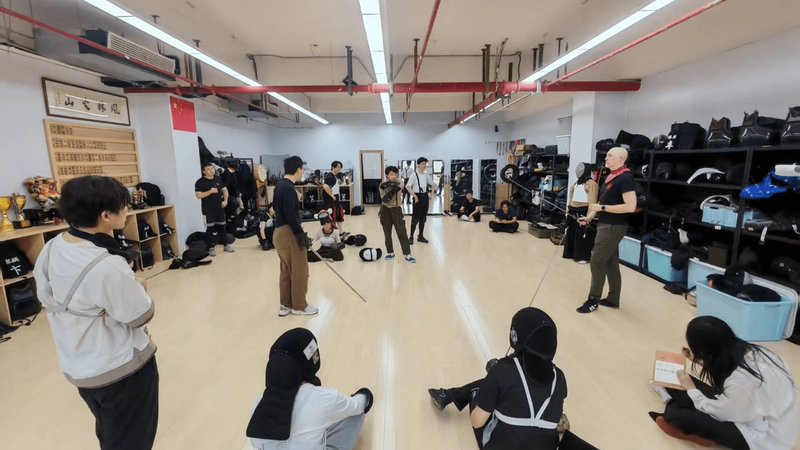
In this post I want to address this type of practice environment and offer an alternative. In general I'm talking about practice times outside of formal classes but many of these challenges and opportunities can extend to formal settings as well.
Competition vs Collaboration
It is easy to fall into creating a competitive practice environment. For many the purpose of the art is success in competition so it makes sense to model this in the practice environment either intentionally or just because that's the only environment you know. Environments like this can sometimes feel like a wolf pack where members are constantly fighting for position in the hierarchy. Every fight on every day is a test of your skills versus your opponent. You're always fighting in a mini-tournament.
The story says that through this environment you are always being pushed by the people below you and challenged by the people above you. That may be true, but the question is: is it the most effective way to learn and grow your practice, even for competition?
A collaborative environment operates on a group level. There is a recognition that every person is there to help everyone else become better. That a rising tide lifts all boats. That not every person needs the same things at the same time to improve, and that each individual is going to benefit from a broad range of approaches to their own training to get the best results.
In a competitive environment the question is "How do I beat you?"
In a collaborative environment the question is "How do we make each other better?"
A Collaborative Training Environment Creates Safety
A big challenge within in a competitive training space is that it takes away the safety to innovate, experiment, and fail. Here I'm talking about emotional and psychological safety. Though often competitive spaces can take away physical safety as well, which immediately kills emotional safety of all kinds.
Collaborative environments find ways to deliver challenge and support at all levels. They recognize that emotional and physical safety are at the heart of creating deep and lasting martial improvement. Effort, trying, discipline, resilience, and improvement are the values that are identified and rewarded vs fighting, being "hardcore", and winning.
Signs of an Unsafe Environment
- Regular injuries.
- People blowing up at each other.
- People talking negatively behind each other's backs.
- Holding secrets about someone's weaknesses or "how to beat" them.
- Aggrandizement, posturing, and other ego driven behaviours.
- Only sparring—no drilling, coached fencing, or other forms of practice.
- Retention of only competitive martial artists.
- Pressure to participate or punishment when you opt-out.
How to Foster a Collaborative Training Environment
- Come with something to work on and disclose it to your training partners.
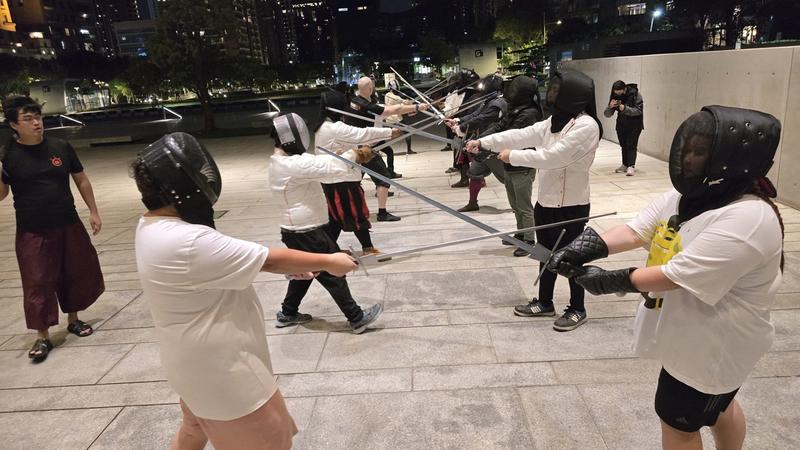
- Employ alternate sparring arrangements like slow, scaling speed, and coached sparring.
- Set alternate winning objectives for yourself based on techniques you want to execute, strategies to attempt, or challenging situations to fight from.
- Make finding failure the measure of success.
- Use sparring games and restricted environments to increase challenge for experienced practitioners and reduce complexity for new ones.
- Tell your partners how you're beating them, then help them plug the holes in their form.
- Practice deconstructing failure points and building drills from them.
- Make drilling a part of your regular practice.
- Hold constructive review and feedback sessions.
- Share your training vulnerabilities and make it safe for others to do the same.
- Pull aside practitioners who are harming the environment's safety and have a private heart to heart with them (you must create a safe space for receiving feedback to effectively change behaviour).
- Suspend practitioners who show themselves to be incapable of fostering safety.
Where Competition Fits In
In no way am I suggesting avoidance of testing yourself or creating real competitive sparring engagements in your practice. As with all things, they need to have their place and the intent needs to be correct. I recommend holding mock or school tournaments, creating environments that safely challenge your weak places both physically and emotionally, roleplaying combat scenarios that emulate particular real-world environments, opponents, or tournament settings.
The important thing is to bring safety here too. The goal is to get better together—to push people forward while minimizing the risk of setting them back physically or psychologically.
Reframe competition within your group to be about personal improvement not inter-personal measurement. There is never a time when competitive comparison to others is valuable. Make room to talk about competition in your group, don't overvalue tournaments, and make sure you embrace all the goals and modes for practice that can exist from the stage performer and the movement enjoyer, to the street fighter and the medal seeker.
How do you create a safe and collaborative training environment in your group or school?