Combat Mindset: Fight All The Way to the End
Devon Boorman ·

I have noted a phenomenon in sparring—especially when fencing someone who feels themselves to be less experienced or less skilled than me—of someone giving up before the hit is made. Perhaps my point is winding its way toward home, and two inches before it touches I feel their whole body relax and their defence drop away. Sometimes I have made my way into a dominant position and before I even begin my (potentially) final blow, they call my hit for me.
Perhaps this person is saving themselves from expending unnecessary energy contesting the inevitable. Perhaps they’re trying to soften some blow to their ego by arresting the final strike with words instead of their torso. What I do know is that they’re giving up too early.
Fortitude Against Fate
I often think of the seminal chess match in 1997 between artificial intelligence Deep Blue and chess champion Garry Kasparov. From a position of defeat, one that human players would have walked away from, Deep Blue was able to make a move that rattled Kasparov and caused him in turn to resign. The computer by nature was not rattled by Kasparov’s superior position and thus simply kept calculating all the way to a turnaround.
It’s important to practice this “all the way to the end” type of mental fortitude, endurance, or staying power. Especially if what you’re framing your practice around is a life-and-death encounter. But our lives also contain innumerable non-swordfighting situations that call for perseverance. I know in fencing I have turned around many defeats, especially when my opponent was overconfident in their position. Here are a few exercises that I use to help train this mindset.
Start from a Position of Defeat
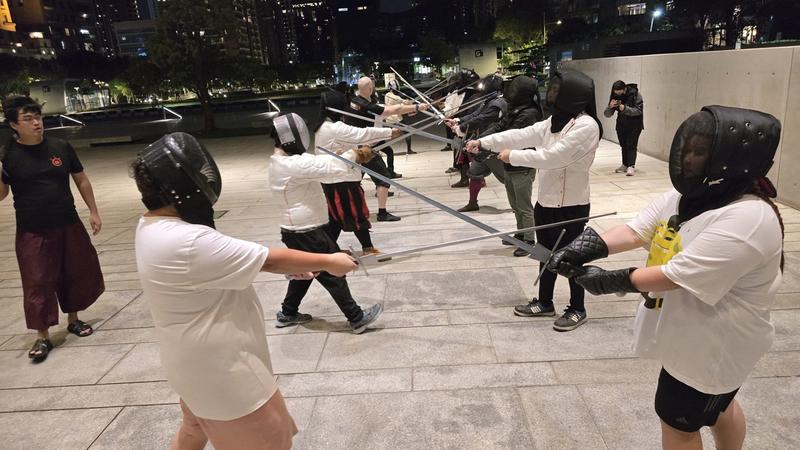
Side A stands still with their sword extended. Side B puts themselves into a final striking position (ideally one that controls the sword of Side A), with the blow in contact with its target. The fight begins as soon as Side B pulls their sword back from the strike. This means Side B starts in a position of significant advantage (that they attempt to keep) and Side A starts from a seemingly desperate position. Variation: Side A cannot step backward as part of their initial attempts to recover (sometimes we call this "back to the wall").
Disadvantaged Start
In these exercises Side A starts in a disadvantaged position where their sword is already controlled or their mobility hindered in some way. Then they must attempt to fence their way out of it.
In both of these types of exercises the goal is not necessarily to win—honestly, Side B should be the winner if they do their job right. However, it is important to practice not giving up. From this place you can discover strategies that *can* work. The situation in combat is rarely as irrevocably foregone, and the outcome is usually more mutable.
So start training for resilience under load. The payoff may help you beyond the simple crossing of blades.
What about you? Have you found yourself capitulating before the end has actually come? What did you do with that feeling? Did you find your "tournaround"? Let me know in the comments below. Thanks!
Devon