Fighting Against Filipino Arts
Devon Boorman ·
Martial Artists can often get caught into their own silos of practice and learning, exploring and only facing other practitioners doing the same thing you’re doing. At many points in learning this is the right thing to do. I advocate for symmetrical practice when you’re establishing foundational proficiency in your art. Yet there comes a time when exploring other styles and arts either through learning them or facing them can help greatly deepen your understanding of your own art.
Cultural Exploration
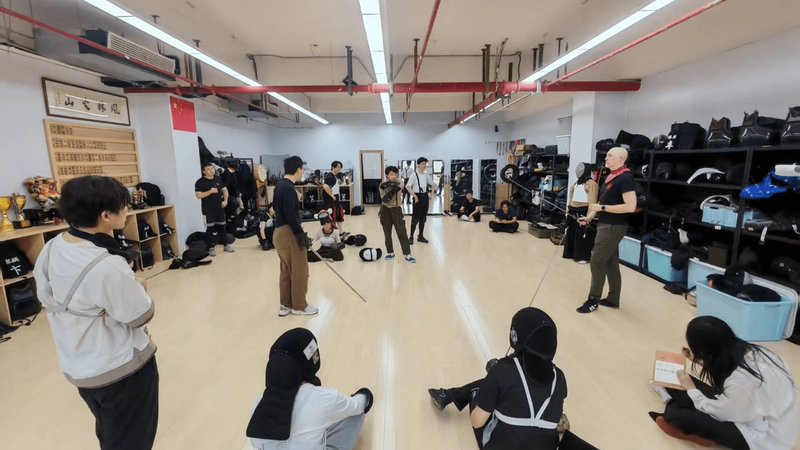
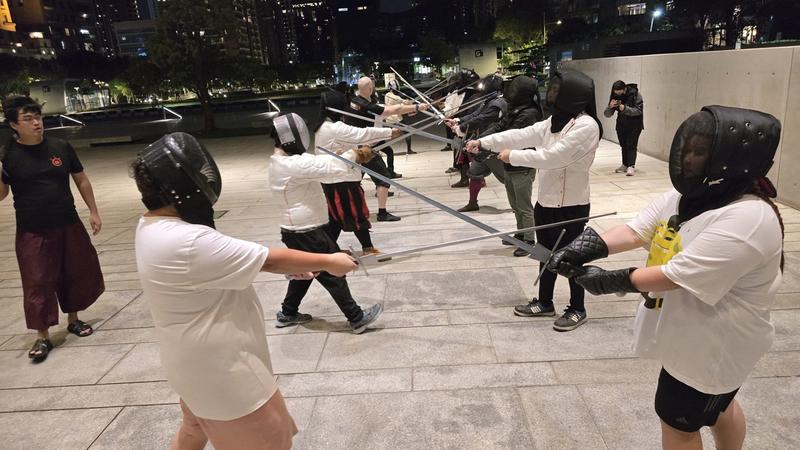
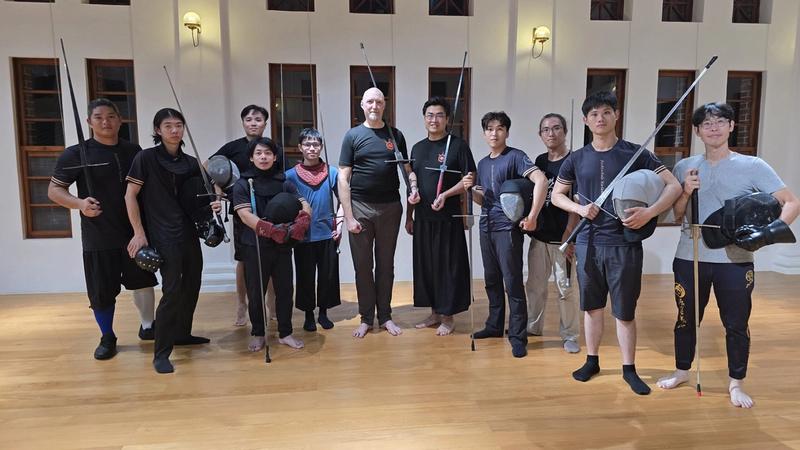
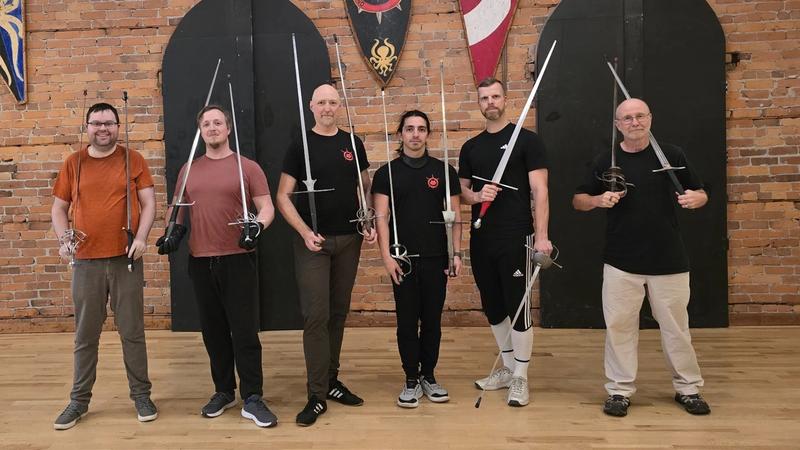
In late 2022, Mike Panian, the principle instructor of Swordfighters in Vernon British Columbia invited myself and Tuhon Loki Jorgensen to teach a collaborative workshop. In this weekend seminar we explored the concept of dual-wielding and how it’s approached in Duello Armizare and Pekiti-Tirsia (the Filipino system that Loki practices). This was one of the most fun workshops I’ve taught in a while, so much so that Loki and I got together a couple months later to shoot some more video and do some sparring.
Here we are in action doing rapier and dagger versus gununting and knife. I’m in red and Loki is in black.
Hilted vs Unhilted
One of the main distinctions between these two systems is that in Italian arts the weapons tend to stay extended, particularly in earnest combat. In most FMA systems the weapons are constantly extended and then rechambered.
Martial arts are driven by their contexts: weapons, environment, culture. The context at play here is that sword hilts protect the hands when the weapons are extended. In fact in rapier and dagger the desire is to use the angle of the blade to channel the opponent’s attack down into the hilts where you are strong and can maintain control with one part of your weapon while striking with another.
Much of the Italian system is moving between extended guard positions where you unite the rapier and dagger together to close the opponent out and force them into a predictable channel where you can collect and strike them in this way.
With unhilted weapons there is typically a need to keep the hands protected by constantly extending and withdrawing them. You address with one weapon to clear or divert, then transfer to the other weapon to continue that control while readying your first weapon to strike.
In both cases the practitioner is trying to, as we say in Italian arts, “put their opponent into obedience”. In the Italian context the feeling is like being cornered and compressed as each reasonable option is taken away from you. The feeling against the FMA practitioner is one of being constantly disordered and rolled over as they strike repeatedly into each counter like a violent sewing machine stitching you in!
Magellan’s Legacy
Filipino martial arts have a long history of connection with Europeans starting with the Magellan expedition of 1519 that famously took Magellan’s life when the overconfident Spanish lost a brutal beach battle to the indigenous forces of Lapulapu, who is still upheld as a hero of the Phillippines today.
There is a lot of Spanish terminology and ideas from Spanish fencing that were adopted into various FMA systems and blended with indigenous weapons, ideas, and martial culture. Yet the nature of the weapons and the cultural context of their practice has kept them quite distinct from one another, which makes these meetups interesting and valuable.