Keeping the "Martial" in Martial Art
Devon Boorman ·
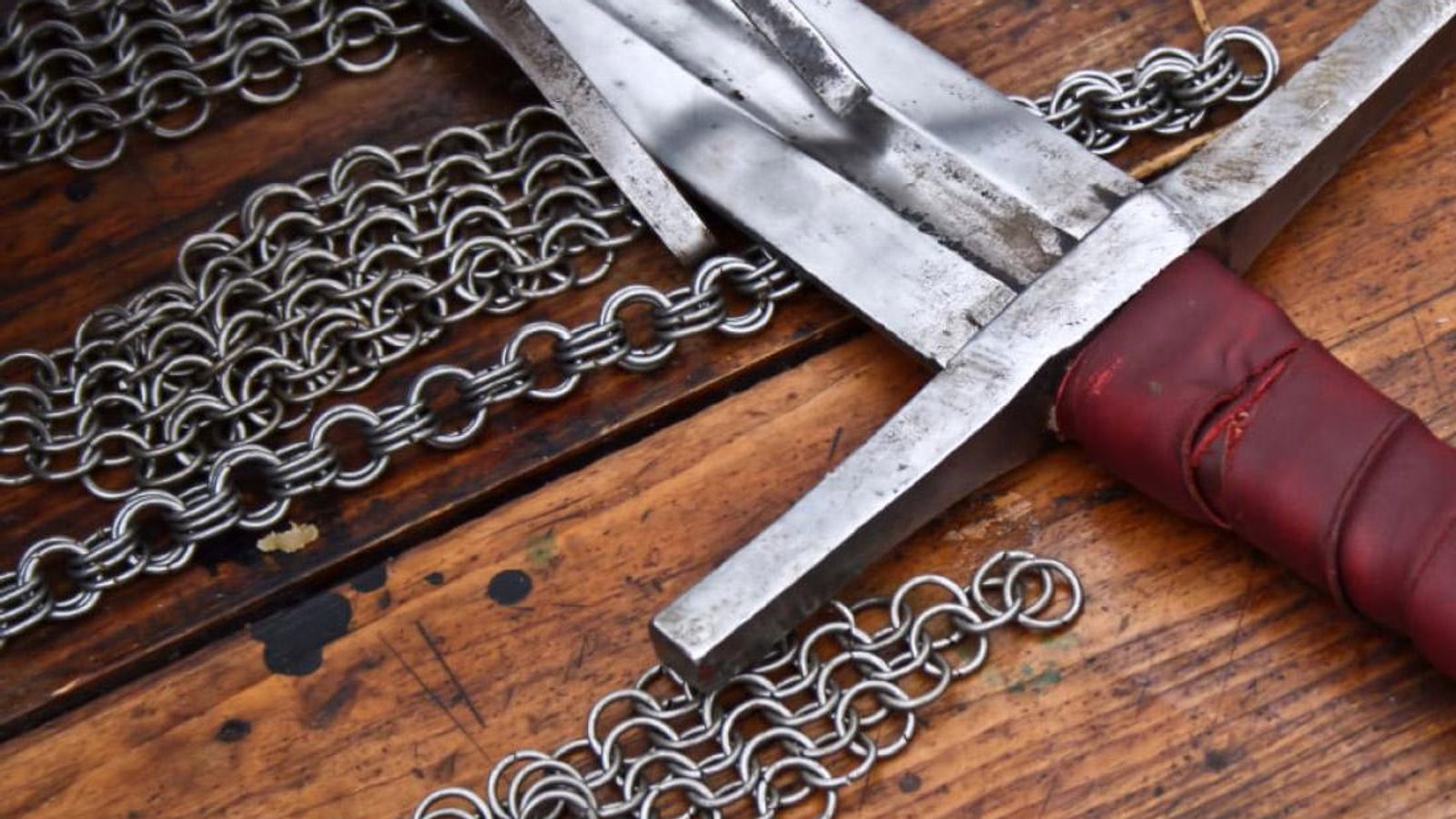
These days there is very little impetus to end up in a duel with sharp swords, or even a true in-earnest fist fight on the street. In fact, I'm quite happy to live in a time and place where I do not need to defend my life on the regular. However, I am a teacher and student of an art that comes from a time and environment where its earnest use was a real, and potentially common, possibility. This real-life purpose is what helped keep the art authentic in a way that is easy to lose today. If you have a desire to keep "true" to your art, as I do, I think it is important to make the "martial" a planned and intentional part of your practice and exploration on a regular or semi-regular basis. Here are a few of the avenues I recommend for doing this:
Work with the Real Tools
Whether you care to centre your practice on understanding the deadly art or not, there is real benefit to understanding it as our forbearers did. It is a humbling experience to stare down the length of a sharp sword that is directed toward you, to feel the edges of two blades bite, and to feel how easily an unblunted point slips from one side of a weapon to the other.
There are many ways to safely engage in this experience and I think it is special and vital to do so. Check out my article on training with sharp swords for some guidance.
Practice Live Cutting & Thrusting
Beyond exercises with sharp sword on sharp sword, it is important to spend time using the tool to do its primary job: hewing and thrusting. I recommend buying a side of pig (ribs and all), dress it in some clothing, suspend it from meat hooks (and attach it to the floor or some kind of weights to keep it in place). Then, practice thrusting and cutting techniques.
Be aware that cutting at a cold piece of meat is actually far cry from putting a blade against warm, hydrated flesh, but it will still give you some sense of both how easily a blade can cut and thrust, and in some cases how weakly.
Alternatively, tatami cutting (a reed mat rolled up and soaked in water) is popular amongst both Eastern and Western sword practitioners. I think it is an interesting way to work on cutting techniques because it can be challenging, you can see the clean lines (or not so clean lines) of your cuts, and chopping something in half is satisfying. However, it is important to recognize that opponents are not like reed mats (or hung pieces of meat). Often we criticize a practitioner for not cleanly getting all the way through the tatami/meat, yet it is important to recognize a combat cut that goes even part way through your face would be unpleasant.
Get Punched in the Face
You may not want to do this for real, but understanding what it is like to be hit, when you're not wearing a whole bunch of protective gear, can give you at least a taste of what it's like to push yourself to be in a violent encounter. The nature of a true and authentic risk of pain, dismemberment, or death completely changes how you feel and respond. When you are struck, even if it is not mortal, you will experience physiological and psychological responses that can be very disorienting, especially the first time.
Many people have found safe ways to explore this side of bladed arts by using tools such as prod-pointed swords, shock knives (an electrified knife used for police training), or simply sparring with a reduced set of protective gear. I can tell you that I never learned to protect my hands so well as when I have sparred with only thin leather gloves against those who specialize in striking such targets (note: we fenced either with reduced speeds or lighter weapons to avoid serious injury while still having the stimulus of authentic pain).
A Last Note on Safety
Be sure that you understand and manage the safety implications of any form of training that you employ. You must balance the reward of what you learn against the risk of learning it. Be sure that you train in a way that will help you be healthy for a long-life as a martial artist and don't let your ego inform your practice.