The Beautiful Art of Solitary Practice
Devon Boorman ·
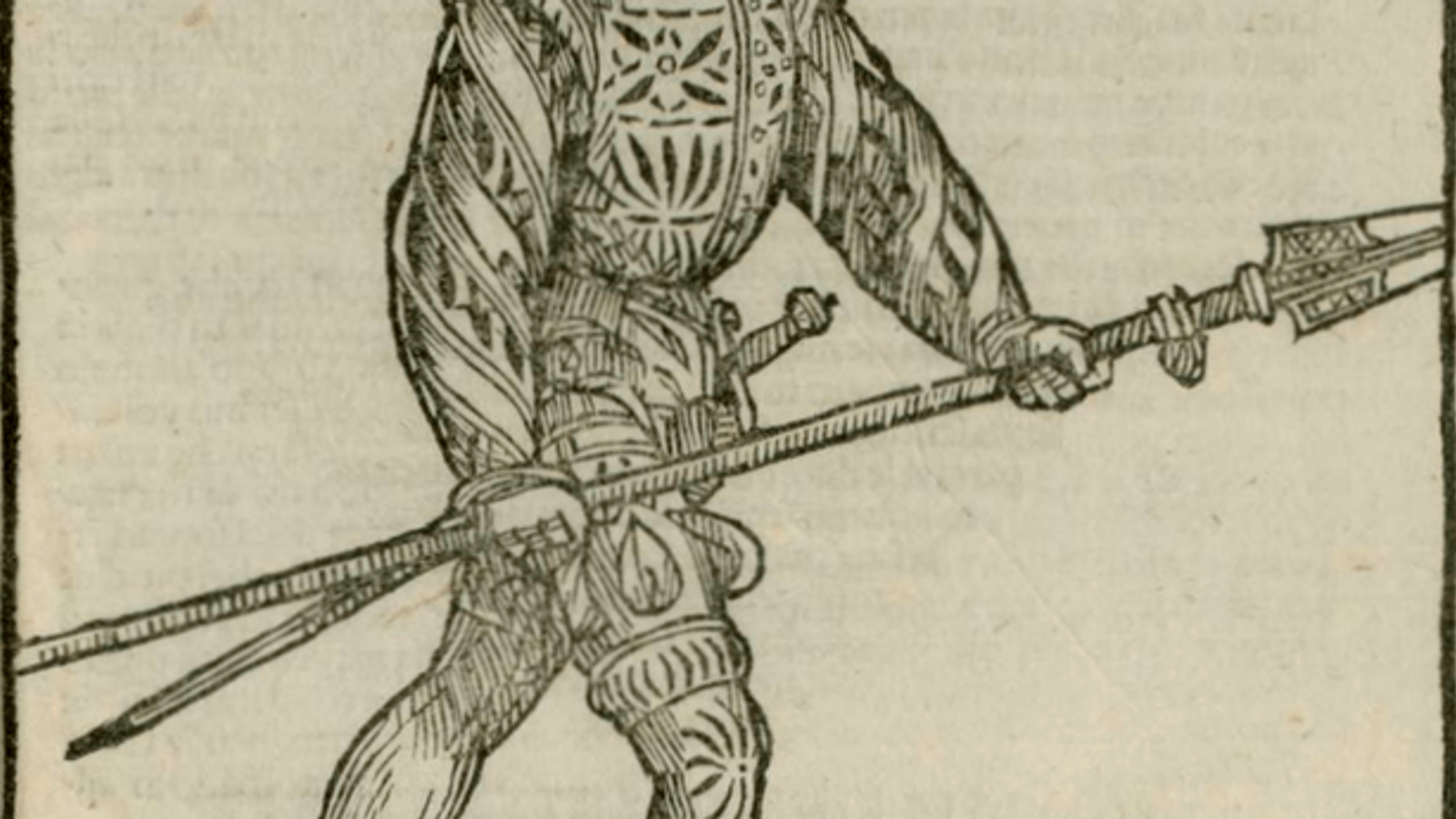
Martial arts practice on my own can be one of the great pleasures of my week. It is a time that is purely for me. I don't have to worry about providing for a partner or guiding a student. I can simply focus on my own body, my own sense of flow, and my own desires from that practice.
There are many motivations one can pursue in solo practice, to name a few:
- Physical Fitness
- Motor Programming (conditioning the mechanics of a technique)
- Power Training
- Efficiency Training
- Flow & Sequencing
- Relaxation
- Enjoying Moving In Your Body
Beyond being an environment where you can focus selfishly, it is also a type of training that is not dependent on anyone else. When you have time to train you are always available.
Physical Fitness
Your martial arts training time might not look anything like your martial art. Perhaps you use that time to go for a run, skip rope, cycle, swim, or increase your cardiovascular health in other ways. You might use it to expand your mobility, increase your core strength, or your balance.
I think any form of fitness that focuses on cardio health, physical resilience (i.e., joint and connective tissue development in particular), or structural strength (abdominal and back) are ideal cross-training for most martial activities.
When I took a class from him a few years ago, Manouchehr Khorasani (an excellent researcher and practitioner of Persian martial arts), made an astute statement: "Physical conditioning is the first martial technique."
Motor Programming, Power Training, Efficiency Training
Many martial techniques can be learned, refined, and made faster (powerful) or more efficient in solo practice, particularly actions like strikes (cuts, thrusts, punches, kicks, etc.) and footwork. Precision and accuracy can be refined through the use of wall targets and hanging targets. Skills like blade control and weapon maneuvering can also be very effectively practiced by propping up a training sword, building a training dummy, or even just practicing moving your sword around mundane objects like a doorknob.
The thing to be aware of in this type of training is that many techniques in martial arts are highly dependent on the specific movements and responses of an opponent (like a parry). Though you can focus on certain aspects of efficiency and power generation of these techniques, make sure that you are regularly getting work in with a partner so you don't waste time conditioning a response that is ineffective in isolation.
Flow & Sequencing
Solo practice can be an effective environment to practice stringing actions together. This is like learning to move between chords on a guitar, or practicing making phrases when learning a new language. Like a conversation, martial arts phrases are highly dependent on what your opponent is "saying", but the more versed you are with how different techniques can effectively connect with one another, the more ready you will be to implement those phrases in partnered practice and eventually sparring. When flowing techniques together focus on rhythm and smoothness ahead of speed. Good sequencing requires that each technique fully achieve its objective with physical precision before moving onto the next. Flow does not mean sloppily merging techniques together—it means flowing gracefully from one effective technique to the next.
Relaxation and Enjoyment
I think these training objectives are often underrated because they feel like they're not "progress oriented". Sometimes when I pickup a sword (especially if I'm alone in my school, or down at the beach) I'm simply seeking to enjoy the feeling of being active in my body and doing something that I find fulfilling. Especially if I've been working really hard (at swordplay or just life in general), giving myself some time to be completely non-judgmental of my swordwork and simply enjoy moving the weapon and my body can be bliss. Often I'll put on some wireless headphones and some good music to help me stay out of my head, and then I go through a timed program that I've arranged in advance or along a theme that allows me to easily improvise.
How do you make the most of your solo training? How does it fit into your overall training routine? I'd love to hear about them in the comments.
Devon