Two-Weapons: Avoiding the Divided Attention Trap
Devon Boorman ·
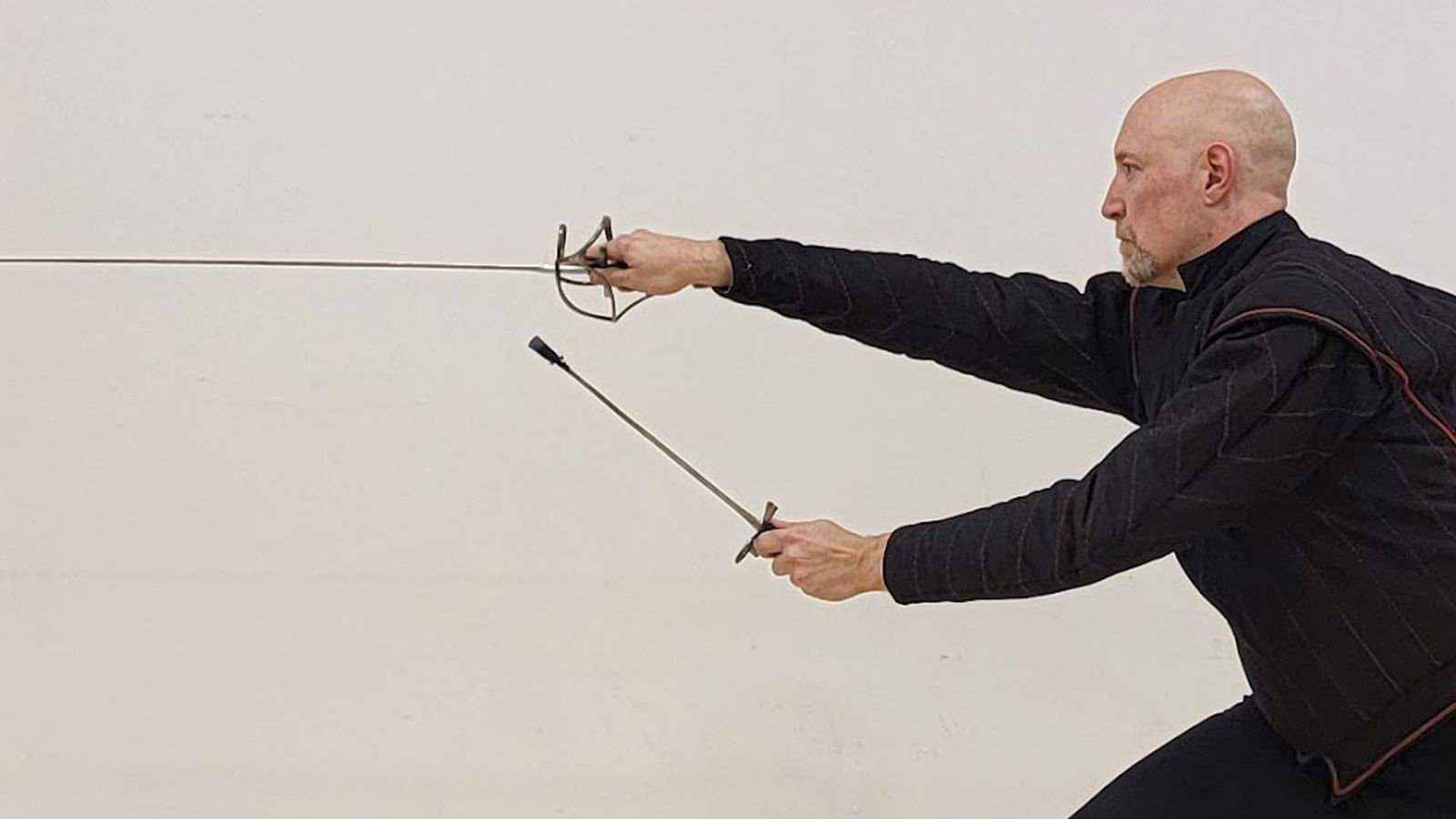
When working with two weapons the biggest mistake is to try to manage them independently from one another. This type of divided attention forces you to rapidly switch between one weapon and the other increasing your cognitive load and slowing your response time. This makes it easier for an opponent to isolate one of your weapons or misdirect your focus to one side while they exploit the other.
You can reduce your cognitive load as well as your opponent’s tactical options by unifying your weapons into a single shape that invites to only one line.
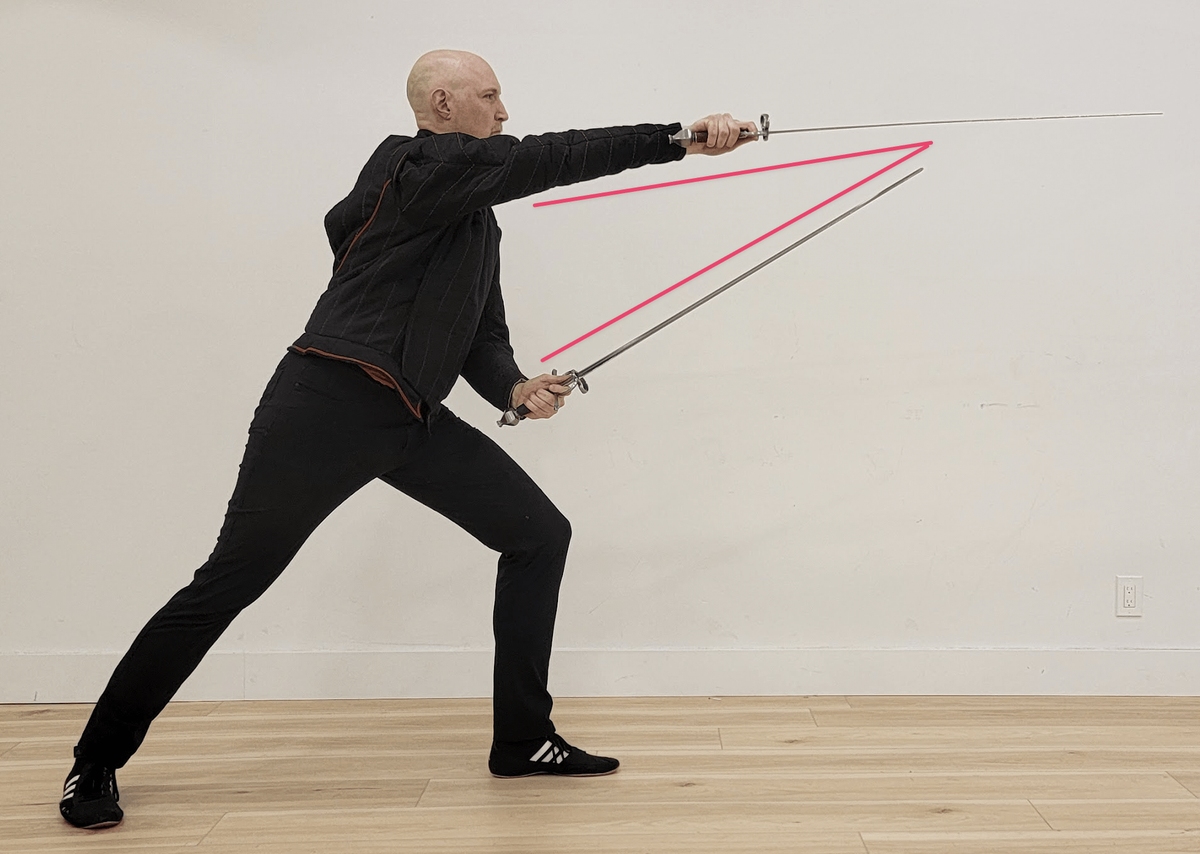
By placing the weapons to one side of the body you can defend both high and low while limiting your opponent to only one open side. This further reduces the openings you need to manage and simplifies your counters.
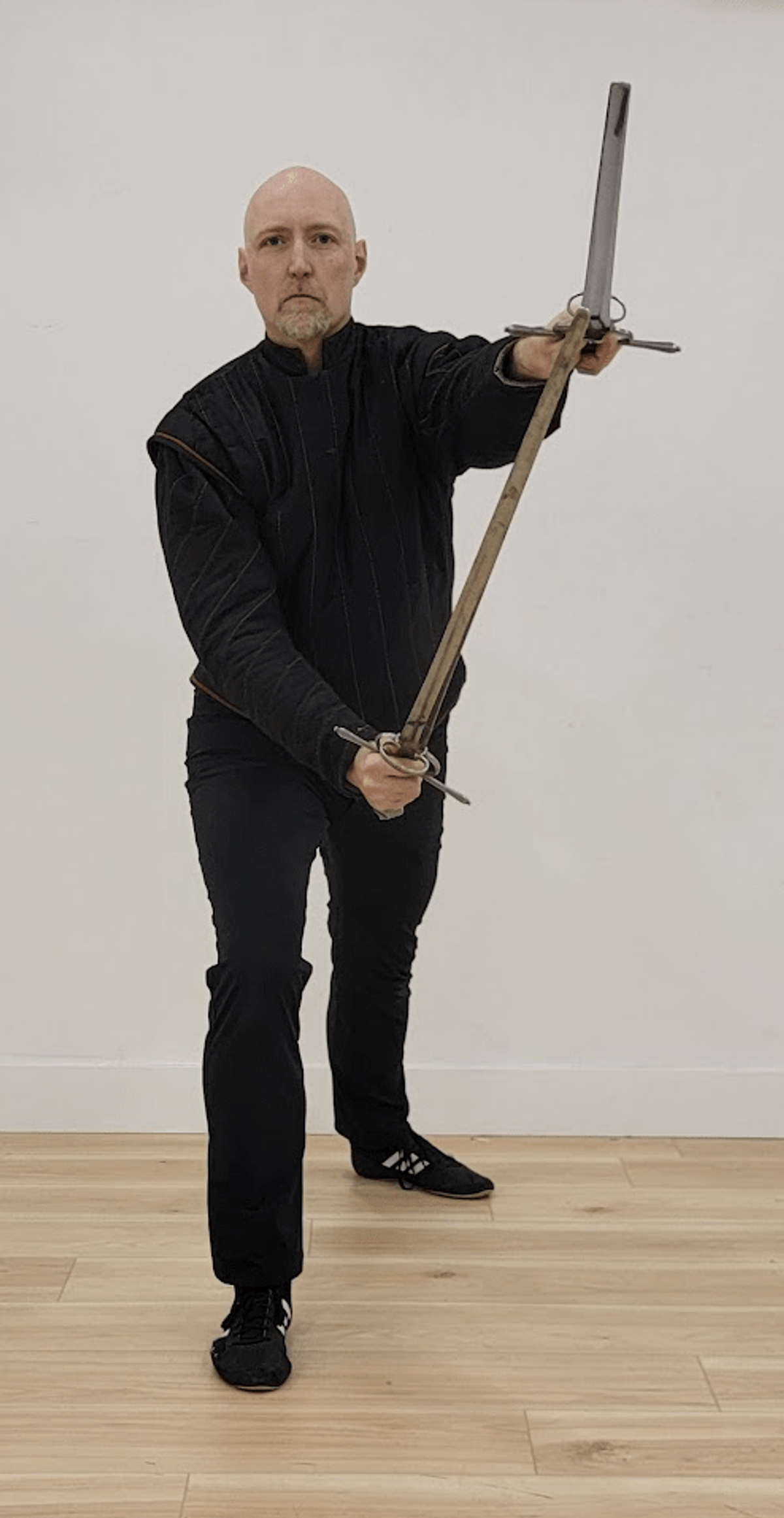
Each shape acts as a unit, a coordinated structure for attack and defense that incorporates both sides of your body simultaneously. In this way you are not defending high with your right sword, you are making a shape on the right with your whole body that defends high and low. When you need to attack on your left, you do not send your left sword forward independently from your right. Instead, you form a shape on your left that both delivers the attack you want while incorporating the defense of your right sword.
Check out this video to see a unified two-sword guard in action and how by using a shape you're safer even if your opponent deceives you or you misread their attack.
Watch: Defending in Unified Guards
Guards As Shapes
A guard is a shape. The idea here is to include both arms and both weapons into our conception of the guard. You are not forming one guard with one side of your body while forming a distinct guard with the other, instead you are forming a type of unified two-weapon shape.
In the Duello Armizare approach we first start with the concept of closed guards. These positions directly unify the weapon by forming inward or outward triangles that fully close one side of the body and always defend high and low.
Closed toward the points
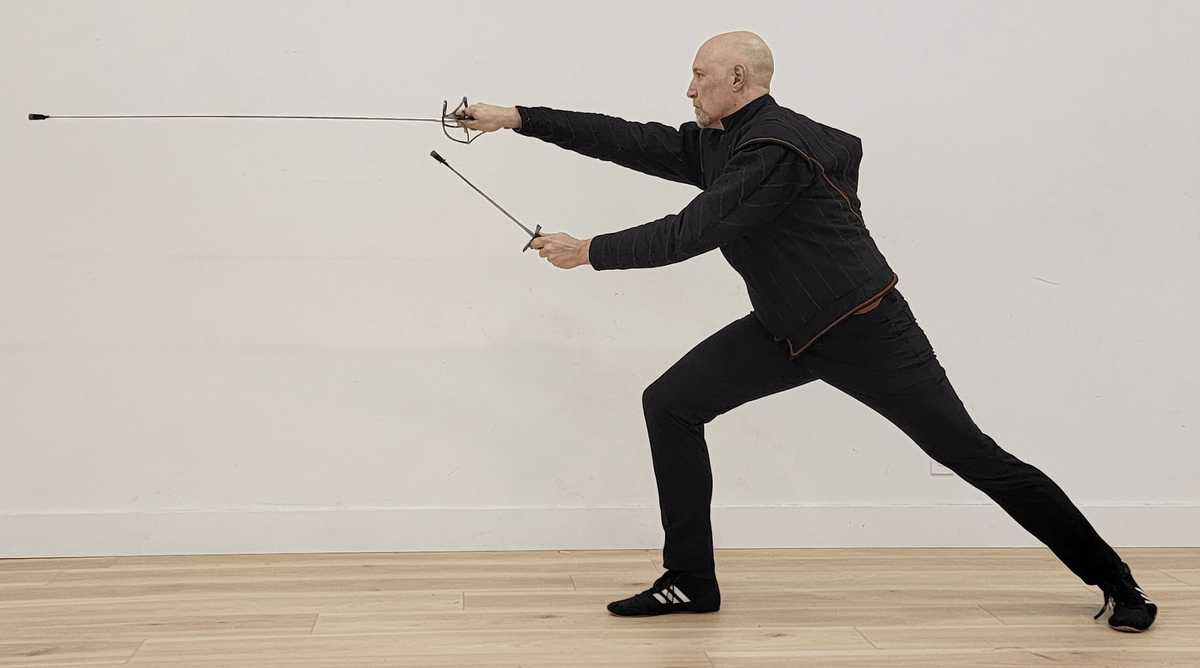
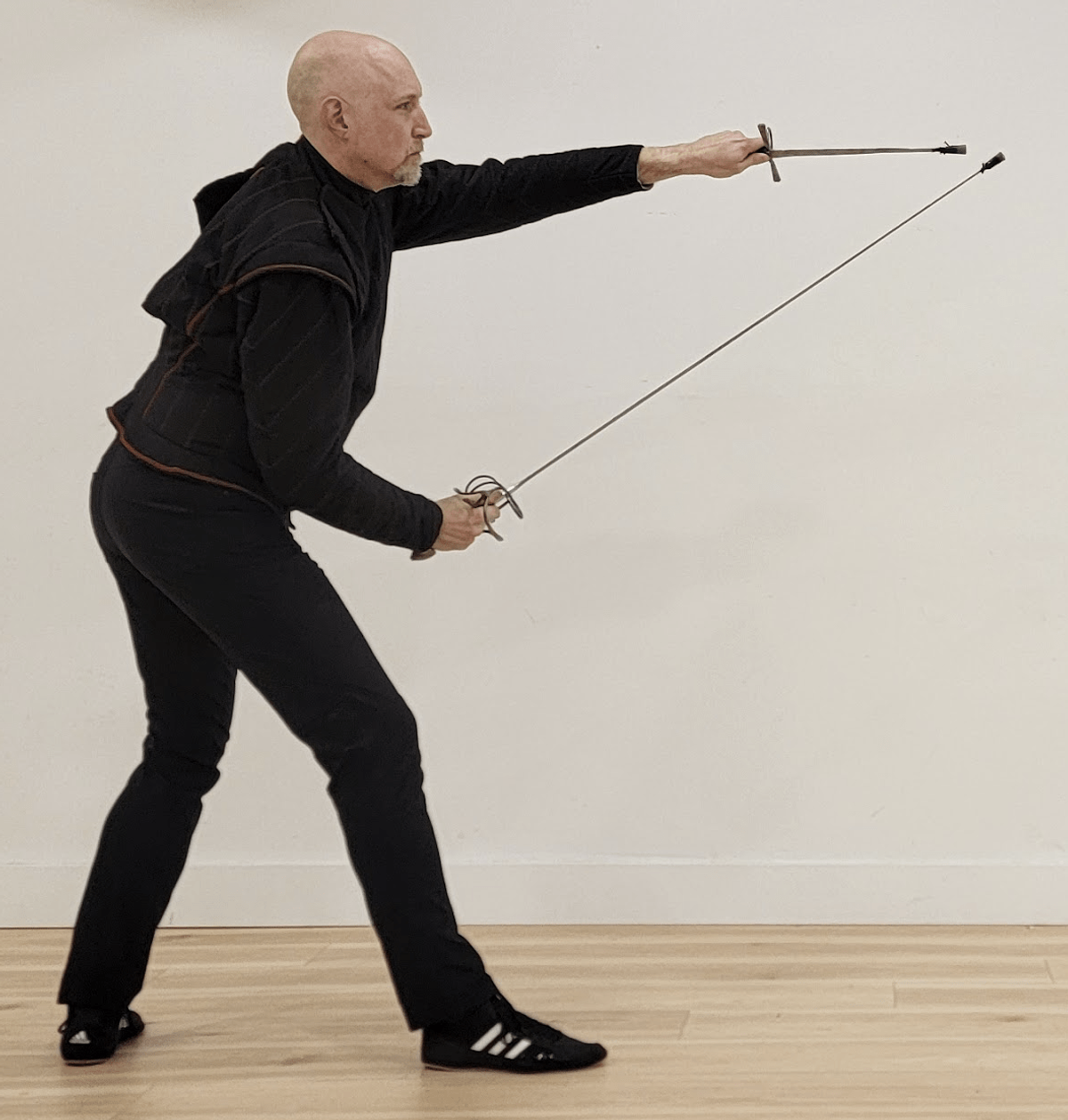
Closed at the hilts
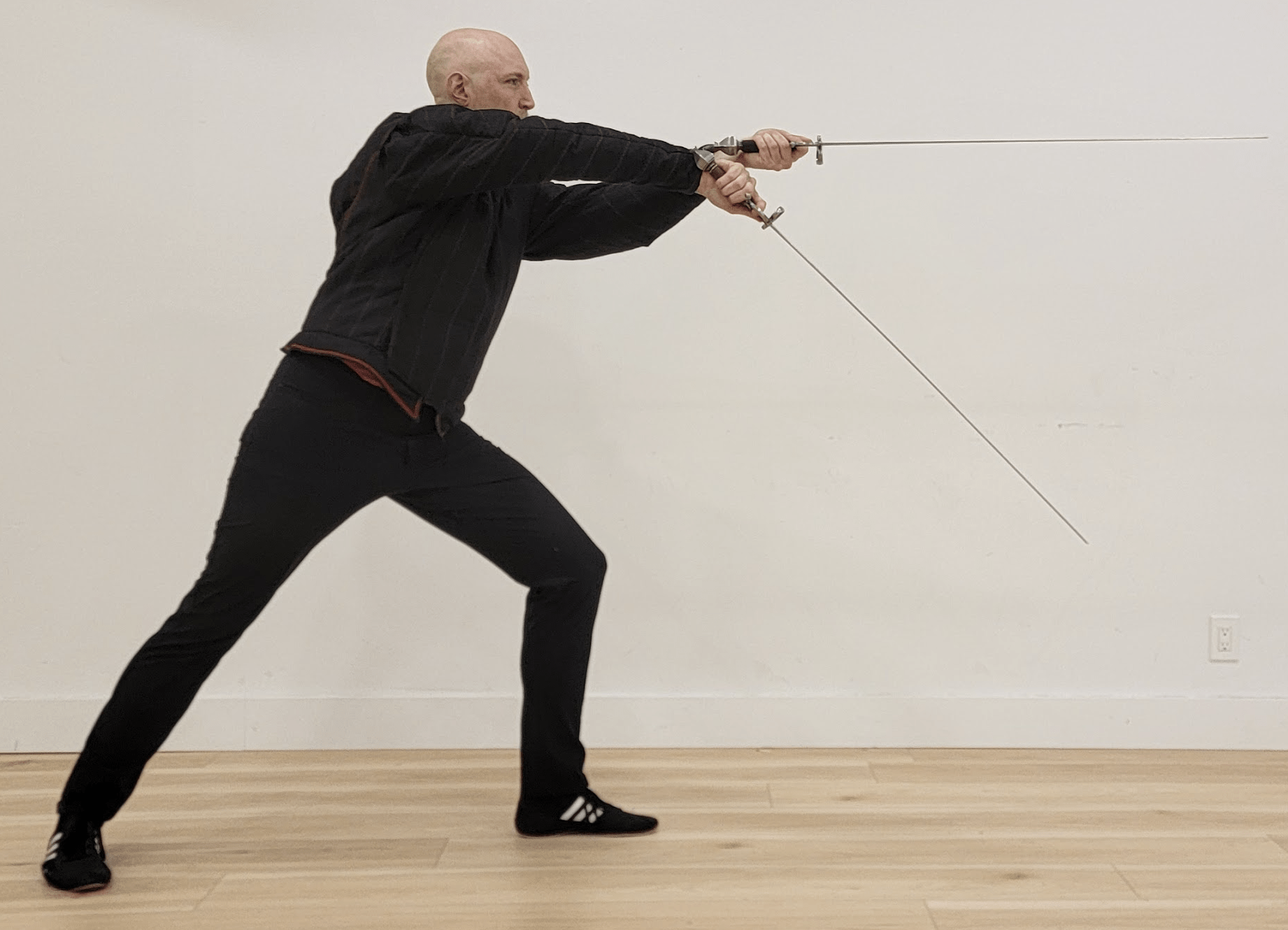
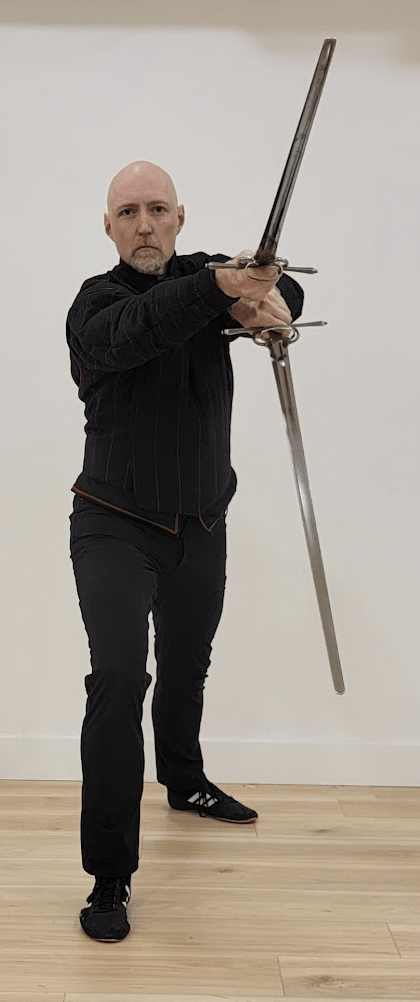
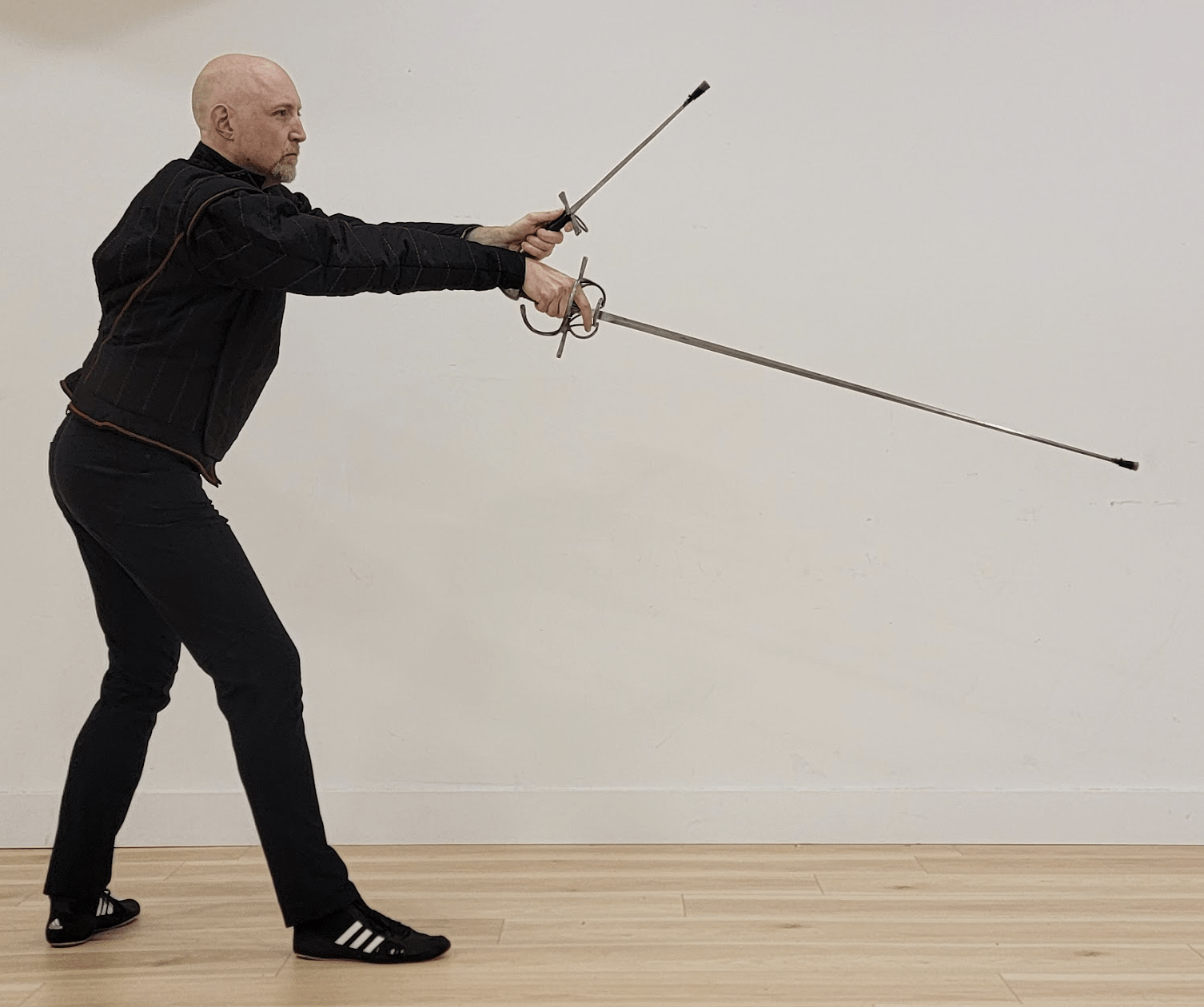
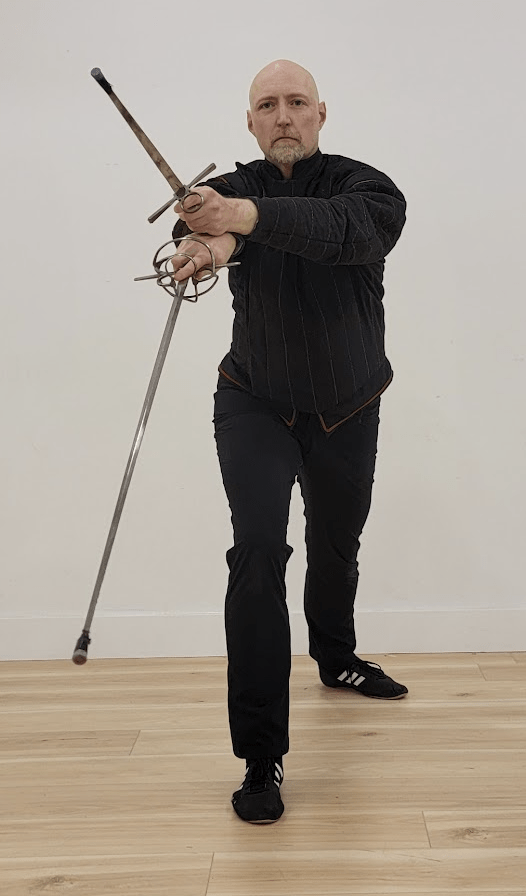
These closed shapes are safe and powerful positions for both striking and defending. By learning to hold them, and find them, you condition structurally and tactically strong guideposts into your martial movement. They become helpful grooves to fall into that ensure you don’t over-parry, over-reach, or split your attention.
In your practice take time to intentionally hold postures for 30 seconds or a minute at a time. Also take time to focus on the start and end positions of given techniques to further emphasize the deliberate formation of good guard.
Training Transitions
Postures are important but training how you move between them is also vital in two-weapon work. This too needs to be done in a unified fashion that coordinates both sides of your body. In this clip, from the Scholars Live series on two-sword closed positions, I share three ways to practice moving between guards along with a couple simple exercises to practice them.
Watch: Managing Two Sword Transitions
Learn More on DuelloTV
If you’re interested in deepening your understanding of dual wielding, DuelloTV’s series on Rapier & Secondaries covers solo and partnered two-sword, rapier and dagger, rapier and baton, cloak, and more all with a focus on effective closed positions.